The Best Fluffy Pancakes recipe you will fall in love with. Full of tips and tricks to help you make the best pancakes.

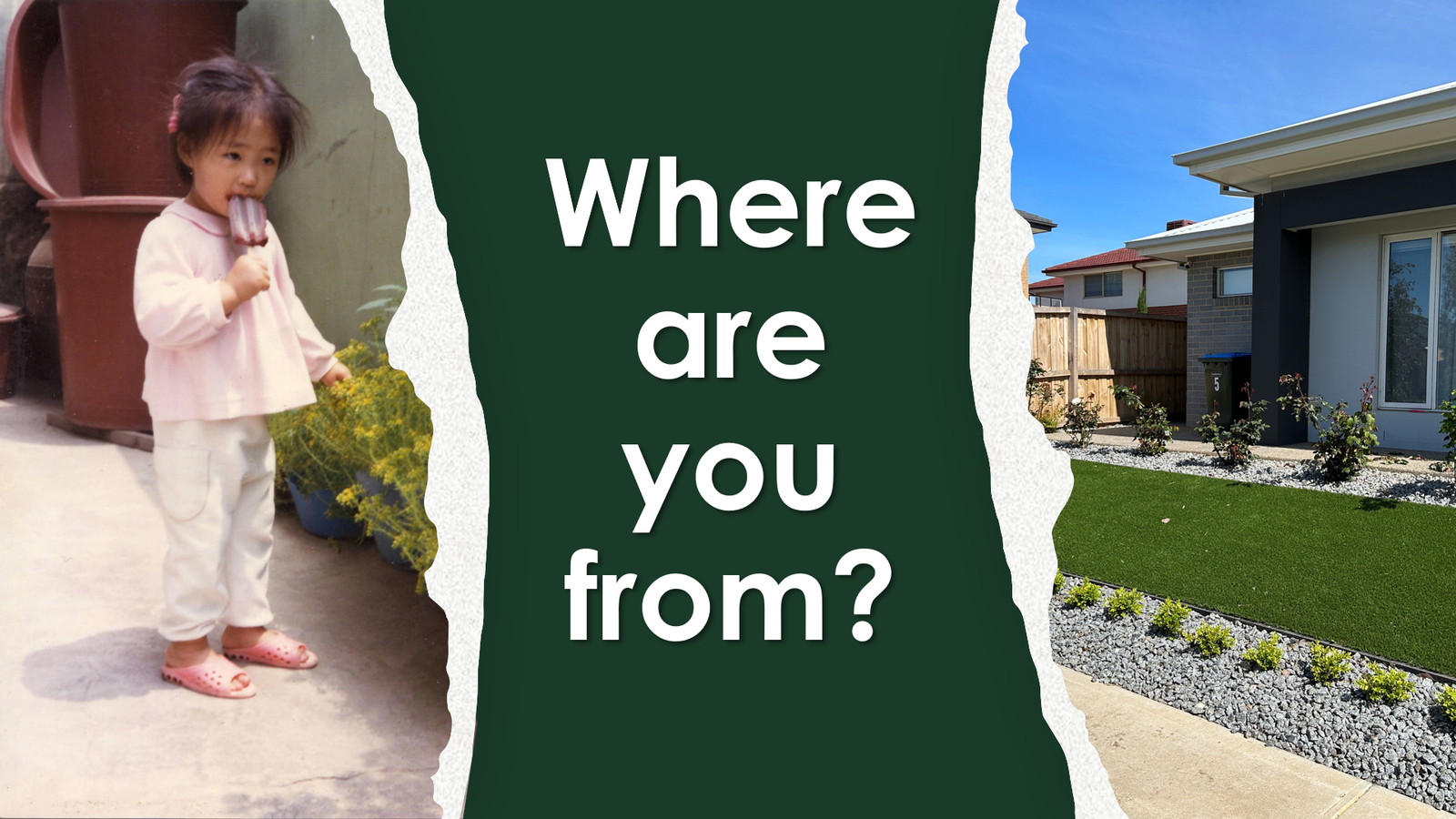
“Where are you from?” should be an easy question. Somehow, I make it complicated. Do you mean where I was born, where I live now, or where I feel at home? While I work that out, there’s usually an awkward pause.
When I visit Korea, I stay at my mum’s house where I lived until I got married. I know every corner. Everything is familiar. But I no longer feel completely comfortable. I feel being a guest.
Then I return to Melbourne. As I walk out of the airport, I find myself saying “Oh, I’m home.” I can’t wait to get back to my house, rest and see my dog, Winnie. This is where my everyday life is.
After 12 years, living in Australia feels normal. Still, my Korean habit remain and that makes me feel very Korean. I also can see how much Australia has changed me. Let’s take a look my ordinary day at work first.
In meetings, I wait for a clear sign that someone has finished. By the time I’m ready to speak, somebody else starts talking. I miss my chance and the conversation moves on. It’s still very hard to find the right moment to jump in.
After the meeting, I see a colleague. They say “Hi, Jade!”, but I can’t recall their name quickly enough. In Korea, we call people by their roles or relationship. We also don’t usually say “Bye” before hanging up. Both took practice.
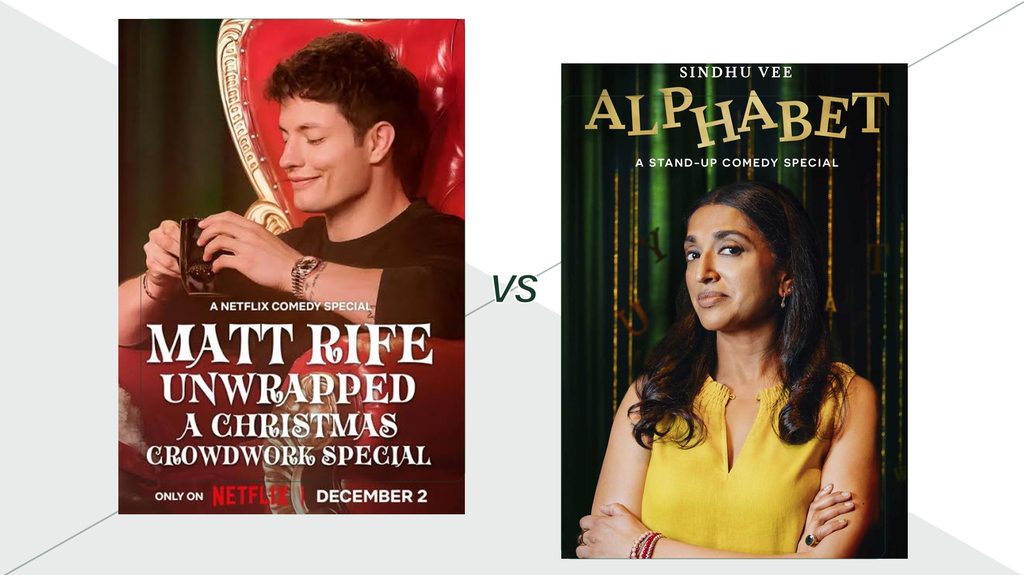
After work, I watch a comedy special on Netflix. I understand every word, but not his joke, so I switch to the other one. Stories about immigrant family make me laugh immediately. The language isn’t the problem. Cultural connection is.
The next day, I meet someone new at work. In my head, I introduce myself the Korean way: “Hi, I’m Jade and I’m twenty years old.” Because in Korea, age shapes the relationship. However, people in Australia rarely share there age, so I become a detective. When did they finish university? How old are their children or siblings? I collect the clue, do the maths and secretly estimate their age. That’s my Korean instinct. Oh, I’m not twenty years old, by the way 😉
After lunch, another Korean habit appears. We learn the 3-3-3 brushing rule: brush three times a day, within three minutes of eating, for three minutes. Brush at work feels completely normal for me, but nobody else is doing it here.
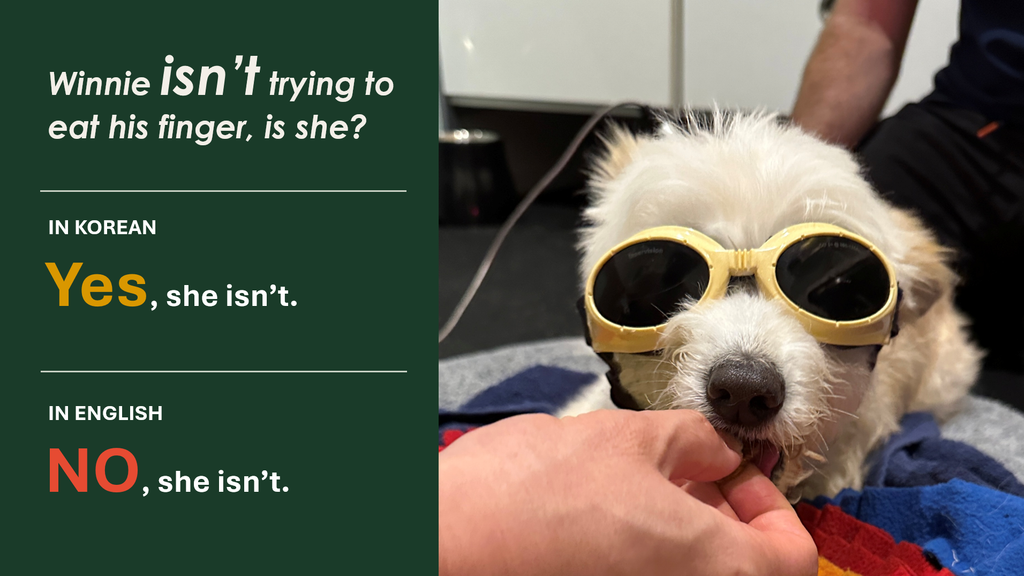
Later, over coffee, I show a colleague this cute photo of Winnie and they ask that question. I automatically answer “Yes, she isn’t.” The English answer is “No” and switching between the two confuses everyone. So please, no negative questions tonight.
These little moments make me feel very Korean in Australia. But when I visit Korea, the pattern reverses. One day, I met my friend without make up, dressed only for comfort. She said. “It’s obvious that you’ve lived overseas. Nobody wears like that in Korea.” Oh, whatever.
On our way to a cafe, we stopped at a crossing. There’s no familiar sound. Then I look right first, although the traffic comes from the other direction. My Australian habit kicked in.
When we reached the cafe, my friend left her belongings on the table and walked to the counter. I did the exactly same thing before, but I can’t do it any more. Korea hasn’t changed. I have.
We had a great time and after saying good bye to her, I stopped at a department store to exchange something. The staff keeps apologising and thanking me even though nothing has gone wrong. Why does good service require so many apologies?
Anyway, they don’t have the one that I need, but they can send it to my mum’s house. After years of Australian delivery times, I think “My flight back to Melbourne is in two weeks. It only needs to arrive before then.”
Well, it arrives the next morning, which is very normal in Korea. But this time, I think about the people who worked overnight to make it possible. Living in Australia made me notice what I used to overlook.
Living between cultures expands my world. It can be exciting and interesting, but also awkward at a times. These experiences have shaped me and I’m still changing with them.
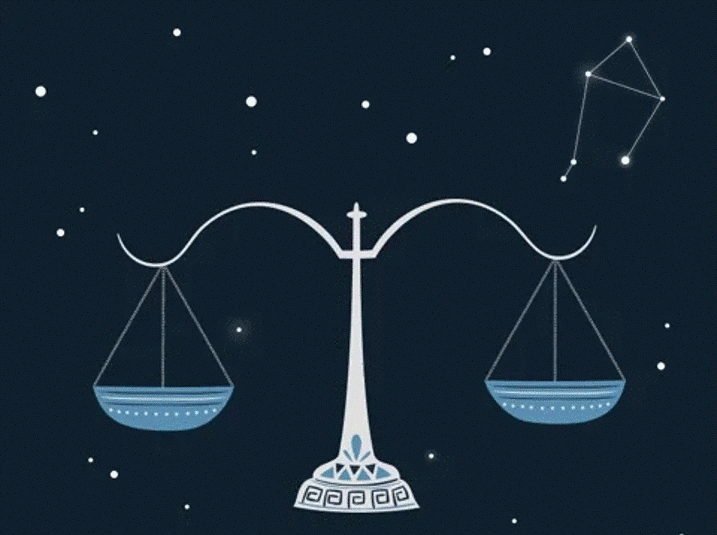
I carry two versions of normal: one from Korea and one developed in Australia. They don’t always balance neatly. Depending on the moment, one feels more natural than the other. But both are part of my life now.
Korea is where my life began. Australia is where I live now. So when people ask me where I am from, I still need to think. If you were me, what would you say?