The Best Fluffy Pancakes recipe you will fall in love with. Full of tips and tricks to help you make the best pancakes.

After the college entrance exam, before starting university, I worked as a private tutor. I became close with the student’s mother as well, and after lessons we often shared meals or sat down for tea and conversation. On the last day of lessons, I think, we had a meal together, and she said something that stayed with me.
When you start dating someone, she said, try to imagine what it would be like to marry that person and live a life together. If, at the end of that imagination, something feels off, then they’re probably not even the right person to date.
For some reason, that stayed with me. Whenever I met someone, I found myself wondering what it would be like to marry them. Looking back now, until I met my last boyfriend, now my husband, that imagined ending never felt right. Maybe this way of thinking had even ruined relationships that could have been fine. But for me, it worked like a kind of safeguard. Imagination is just imagination, dating is dating, and marriage is marriage, but at the very least, it kept me from getting involved with someone truly wrong.
I thought of that conversation again because travel feels similar. Most of the time, travel is just passing through places, but at some point I started imagining what it would be like to actually live there. What would it be like to make a life here, to spend my everyday in a place like this, and how might it change me. I find myself thinking about these things without trying.
In the way a server looks at me while taking my order, in the expression of a barista handing me a coffee, I try to read something from them. What would it be like to move here, not as a visitor, but as someone who lives here.
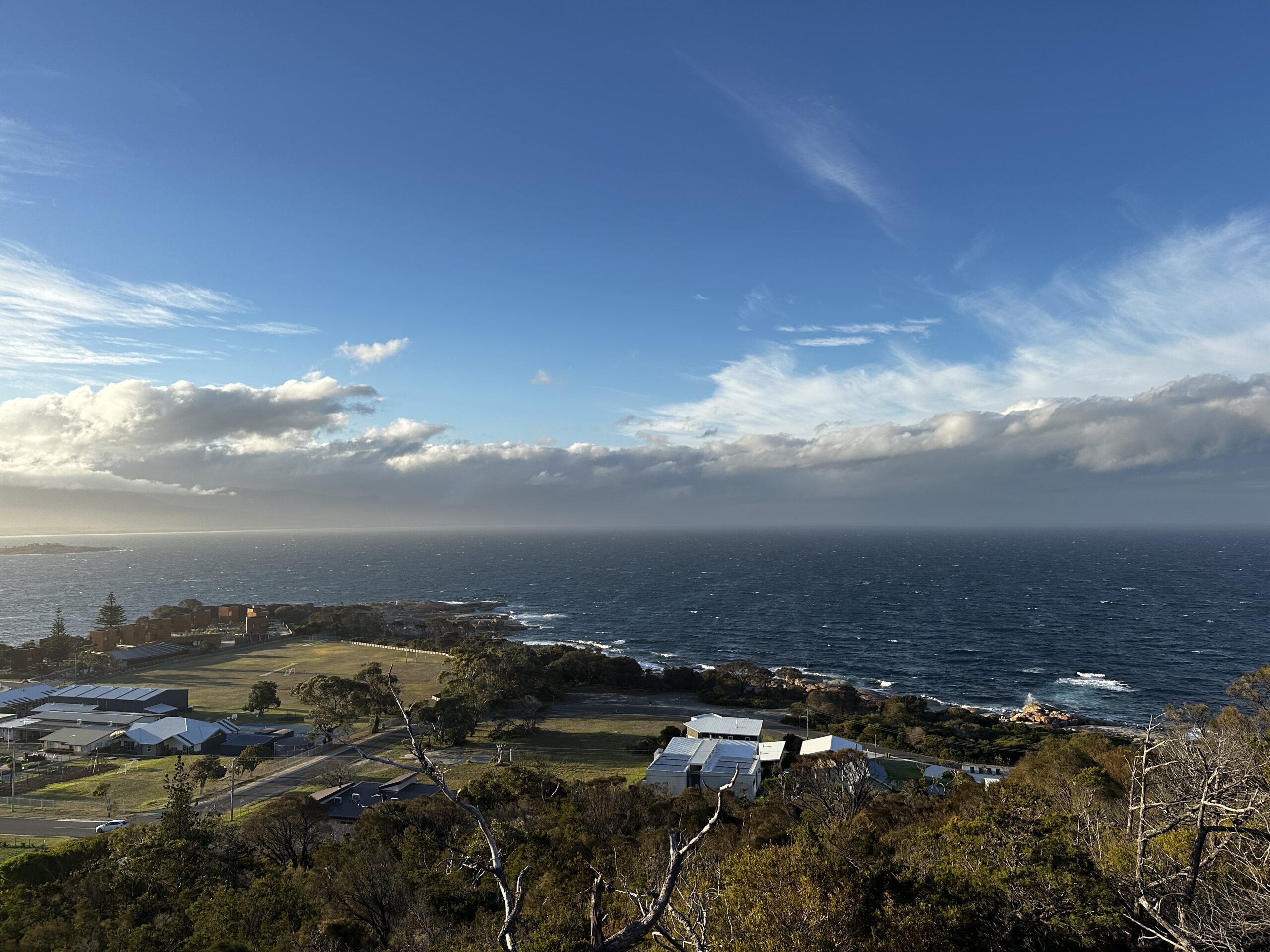
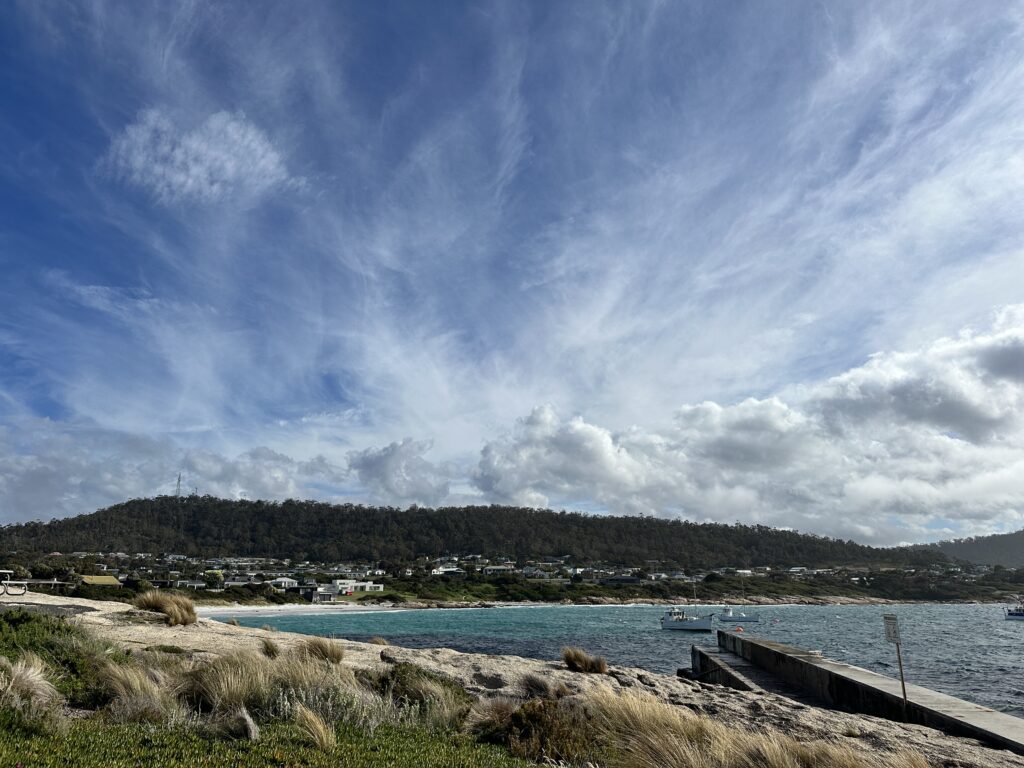
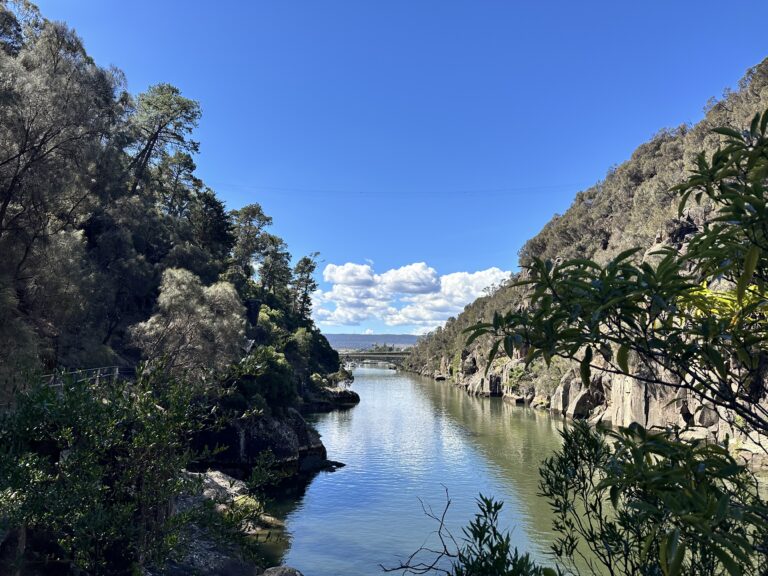
By the third day, I found myself thinking that if I could keep doing my work here, whether remotely or in some other way that allows for a steady income, I might want to live in Bicheno. I had left Launceston before I could form much of an impression, and in St Helens, aside from a wonderful shop called MinT Gallery, felt like it was fading. Too many shops were closed on Sunday, the streets were quiet, and there were too many houses up for sale. Maybe that’s why, arriving in Bicheno after that slight disappointment, I started to think that living in a small, quiet town like this might be nice.
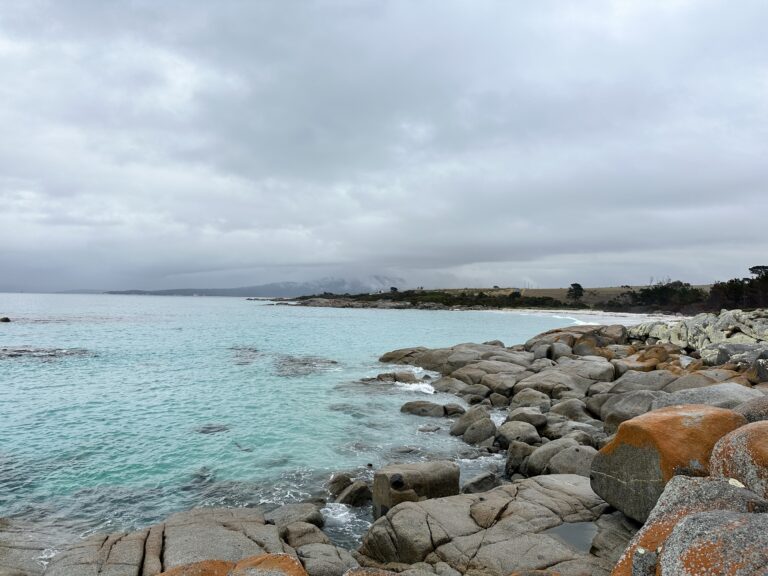
Bicheno was small, but full of a kind of gentle liveliness. The supermarket and restaurants were quietly busy in their own ways, and the blowhole, though much smaller than ones in Kiama or elsewhere, kept splashing without pause. There was something charming about how accommodation, cafés, and even a laundromat were gathered closely together in this small town. There were houses for sale here too, but not as many as in St Helens, and the whole town carried a certain feeling. I thought that living here, writing or doing some kind of work, might be peaceful. That it might make me feel lighter, more at ease.
When I was first considering moving abroad, I went through a similar process. The US? I might get shot, and what if I couldn’t’t afford healthcare. Would working there really be any different from working in Korea? Then Canada? Maybe better, but there’d still be a big time difference with Korea. Would it be hard to stay in touch with family? Then how about Australia? My husband had lived here for about a year on a working holiday visa, and it seemed alright. Would it still be okay now? Okay, then Australia. Decision made.
We tend to make big decisions quite easily. I think it took about ten minutes to decide which country to move to. And deciding that I could live in Bicheno took maybe thirty minutes of being there. The thought of leaving our life in Melbourne and moving here entirely didn’t even feel that unreasonable.
Someone once said that people travel to return home, to realise how precious home is. I agree with that completely, but for me, travel also feels like a way of exploring the possibility of another home. To imagine what it would be like to live here, what everyday life here might feel like, how this place might change me. And to imagine how all of this, which feels new to me now, would look if I were someone who belonged here. To wonder what locals see that visitors don’t, and to look around with that question in mind. Maybe that’s the real charm of travelling.
Over the two weeks in Tasmania, the only places I found myself wanting to live in were Bicheno and Strahan. Places where I wouldn’t just be passing through, but could stay as someone who lives there.